Author: emmakailyn (Page 3 of 5)

Digital Tools for Reading and Writing

07/17/25

Today I looked into a variety of digital tools that can be integrated into the classroom. I explored four tools: Padlet, BoomWriter, Epic! Books, and Edpuzzle. I’ve used Padlet in the past and I think it’s a great way to get students to share their ideas for brainstorming without being nervous to speak in front of the class. BoomWriter was new to me, and stands out as an awesome way to get students writing collaboratively. Epic! Books is a powerful tool for differentiated reading as it offers a vast library of literature. Lastly, Edpuzzle is a great tool for educators as it allows you to embed questions and voiceovers into videos, turning passive learning into active learning.

I am most excited to try Edpuzzle and BoomWriter with students. Edpuzzle seems like such a great resource to make video content more interactive. I can see it working well, especially for subjects like science that are information-heavy. BoomWriter too is a fantastic tool for building classroom culture and community, while strengthening writing confidence. It could be a fun and engaging way to create class stories or even integrate cross-curricular writing.

The only tool that fell short today is Epic! Books. Although it has a large library filled with excellent content, its use is limited to classrooms with consistent access to devices, which isn’t always the case.

Literacy, English, and Video Games

07/16/25

Today I looked into Alvermann, Donna E., and Dennis Sumara. “Ideas that changed literacy practices: First person accounts from leading voices.” (2021): 1-325, specifically chapter 6. Literacy, English, and Video Games: Challenges and Continuities Through Change by Catherine Beavis. Reading through this chapter reminded me of a research paper I wrote a couple years ago about the social benefits of online gaming. I reread this paper, and I think it really connects to what we are learning in regards to how literacy, collaboration, and communication can be supported by digital technologies. So here’s my essay:

The Social Benefits of Online Gaming

Everyone who plays online video games has heard the same chastisement, time and time again: that playing violent video games is isolating and will cause antisocial behaviour in the real world. Every community of hobbyists faces criticism, and yet the online gaming community seems to face a large brunt of critiques, especially from parents and people whose only experience with online gaming is the endless levels of Candy Crush. Online gaming provides an easy ice breaker to meet new people with common interests, particularly in games where trust between players is the only way to achieve a win. However, online gaming helps to develop and enhance strong friendships between gamers, increasing social skills for those who may be deficient in socialization, and is still lacking evidence of a direct relationship between online gaming and real-world aggressive behaviour. 

Online gaming has long been painted with the brush of being lonely and isolating, when in reality, online gaming breeds communication and friendship between gamers (Anderton, 2018), with over 60% of all gamers choosing to actively play with others (Entertainment Software Association, 2018, as cited in Smith et al., 2020). A 2018 study completed by Qutee revealed that 66% of gamers included in the study had made up to five strong friendships through gaming, with an additional 37% of gamers claiming that they had made and maintained more than five friendships through online gaming (Anderton, 2018). Multiplayer games enhance social relations among gamers by the very way that multiplayer games are constructed. The majority of multiplayer games are built with relations between gamers in mind–in order to proceed and win the game, one must form trust in their teammates and socialize with them to achieve a common goal (Sahi et al., 2019). Online role-playing games (RPGs) are especially true to this statement, as RPGs are mainly played for the social element. Games centred around the role a gamer plays allow players to improve their socialization skills, learning who to trust and befriend in a group setting (Sahi et al., 2019). Online gaming is a hub for interpersonal connections, leading to strong friendships and loyalty within the gaming community, engendering happier, less stressed gamers. In a study executed by Qutee, gamers were asked how they believed online gaming was beneficial, and over 40% answered with the opinion that online gaming improved their mental well-being (Anderton, 2018). This statistic is important when considering just how many people struggle with their mental health in today’s world and how gaming can be used to unwind and relax, just like every other hobby.

Due to how online gaming helps improve gamers’ mental well-being, it may also be used as an outlet for those unhappy with their real-world lives. People, especially children, lacking social support in their offline lives may use online gaming as a social resource, motivating further use of video games to compensate for a deficiency in social contact (Mun et al., 2023). Deficient social skills are important to consider when evaluating the lack of societal rejection when faced with anonymous socialization–there is no fear of judgment for individuals with lower social skills. Children raised by parents with mental health issues are especially prone to turning to online gaming to compensate for a lack of socialization within their household (Mun et al., 2023). Parents with mental health issues are more likely to have less of a “hands-on” approach to raising children and thus fewer social interactions with their children, leading to a deficiency in their children’s developing social skills (Mun et al., 2023). Online gaming communities allow instant and gratifying sociability among gamers lacking in social experience in the real world, without fear of ostracization and face-to-face rejection. 

Along with anonymity in the online gaming world comes the ability to be rude through a screen, with the small number of people using this to their nefarious advantage overpowering the mass of people choosing not to be rude. These individuals perpetuating the stereotype of hostility in the gaming community transferring over into violent real-world behaviour is a large part of where the online gaming community gains its reputation for poor social skills among gamers in their offline lives (Gromada, 2022). Yet the social benefits of online gaming are evident for those with hostility issues, where social skills and relationships made through the online gaming community transfer over to relationships and emotional stability in real-world behaviour (Smith et al., 2020). Trash talk and “trolling” within the gaming community are often done with friends to antagonize opposing teams and are a part of the experience of gaming as a whole (Nakamura, 2012, as cited in Smith et al., 2020). Trolling is a popular antagonization tactic in online communities where an individual seeks attention for the sole reason of creating a controversy. While trash-talking and trolling can and have, in the past, been taken too far, there is no direct link to hostility and violence in online games seeping into real-world behaviour (Williams et al., 2005, as cited in Smith et al., 2020). Research surrounding cyber-aggression in the gaming community has grown, yet there is still a lack of evidence of direct causation between online gaming and real-world aggressive behaviour (Smith et al., 2020). People who struggle to control their emotions tend to turn to gaming as an outlet, instead of the stereotypical belief that gaming itself causes violence in real-world behaviour.

In sum, online gaming facilitates healthy socialization, communication, and friendships among gamers, especially those with deficiencies in their social skill set. The social benefits of online gaming are the direct antithesis of the long-standing stereotype of video gaming being a lonely and isolating hobby, which is a view that 93% of gamers see as incorrect (Anderton, 2018). The online gaming community is not anywhere near perfect, but it does not deserve the intense hate and blame received due to the stereotype of gaming causing loneliness and violence in real-world behaviour, though future studies should look into the role that gaming addiction and normative beliefs among gamers may play in hostility. Online gaming as a community will only continue to grow, and it is salient to see the positive effects stemming from this community, especially because it is a community filled with members of society who will one day be our future leaders.

References

Anderton, K. (2018). The impact of gaming: A benefit to society [infographic]. Forbes. https://www.forbes.com/sites/kevinanderton/2018/06/25/the-impact-of-gaming-a-benefit-to-society-infographic/?sh=2fd9acf4269d 

Hilvert-Bruce, Z., & Neill, J. T. (2020). I’m just trolling: The role of normative beliefs in aggressive behaviour in online gaming. Computers in Human Behavior, 102, 303–311. https://doi.org/10.1016/j.chb.2019.09.003 

Gromada, A. (2022). Moderate Gaming and Internet Use Show Positive Association with Online Reading of 10-Year-Olds in Europe. Computers and Education Open, 3, 100109-. https://doi.org/10.1016/j.caeo.2022.100109 

Mun, I. B., & Lee, S. (2023). The influence of parents’ depression on children’s online gaming addiction: testing the mediating effects of intrusive parenting and social motivation on children’s online gaming behavior. Current Psychology (New Brunswick, N.J.), 42(6), 4991–5000. https://doi.org/10.1007/s12144-021-01854-w 

Sahi, M. & Bhagat, G. (2019). Positive effects on online games: A review. Journal of Critical Reviews. 6(3). https://www.jcreview.com/admin/Uploads/Files/61a4723e6c4002.43511818.pdf 

Smith, C. M., Rauwolf, P., Intriligator, J., & Rogers, R. D. (2020). Hostility Is Associated with Self-Reported Cognitive and Social Benefits Across Massively Multiplayer Online Role-Playing Game Player Roles. Cyberpsychology, Behavior and Social Networking, 23(7), 487–494. https://doi.org/10.1089/cyber.2019.0349 
Digital Reading and Writing

07/15/25

Today, I explored digital reading and writing through the lens of several “Would you rather?” questions. The answers surprised me… although I am very “for” technology, especially in the classroom, when faced with these questions, I seem to prefer print.

Would you rather read the book or watch the movie of a story?

I would choose reading the book every time, although I would love to watch the movie after I have completed the book. This is because movies cut out a large portion of the story in order to fit everything into a nice 1.5h-2h length. The book contains the whole story, and RARELY is the movie’s version ever better than the book’s.

Make a video or write a paper?

I would always rather write a paper. I tend to procrastinate, and making a video last-minute, at 2am, in the dark, is not usually the best way to showcase my knowledge. I can bang out a paper in a couple hours, fueled on pure adrenaline and a Yerba Mate.

Write a book or start a podcast?

Although I have tried both, I would 100% rather write a book. I have always loved creative writing and intend to publish novels in my future.

This definitely surprised me, although I grew up printing in school. I wondered if students who grew up with more technology would have different answers, so I decided to ask my 12 year-old and 9 year-old sisters for their opinions.

Rylee (9) would rather read the book, write a paragraph (She’s in grade 3 I don’t think she knows what a paper is), and write a book. Lexi (12) would rather watch the movie, write a paragraph, and write a book. Very interesting! Although we are siblings and grew up together, so these are probably skewed results.

Core Competencies

07/14/25

Today, I looked into how the BC Curriculum Core Competencies connect and can be supported by digital technology and digital literacy. Creating a (beautiful) Venn diagram to show my findings allowed me to explore how important using digital technology, and teaching digital literacy, is to the curriculum. When used with intention, digital technology and literacy can amplify Communication, Personal and Social Awareness, and Critical and Reflective Thinking.

Digital literacy is more than just knowing how to use a computer. It’s about understanding how to be thoughtful, ethical, and critical when navigating the digital world. Core competencies like Communication and Critical and Reflective Thinking are greatly strengthened when students have the opportunity to use digital tools to evaluate information, research, and collaborate with others. By using these tools to respond to the world, students become confident learners with empowered voices.

Identity, Collaboration, and Communication

07/11/25

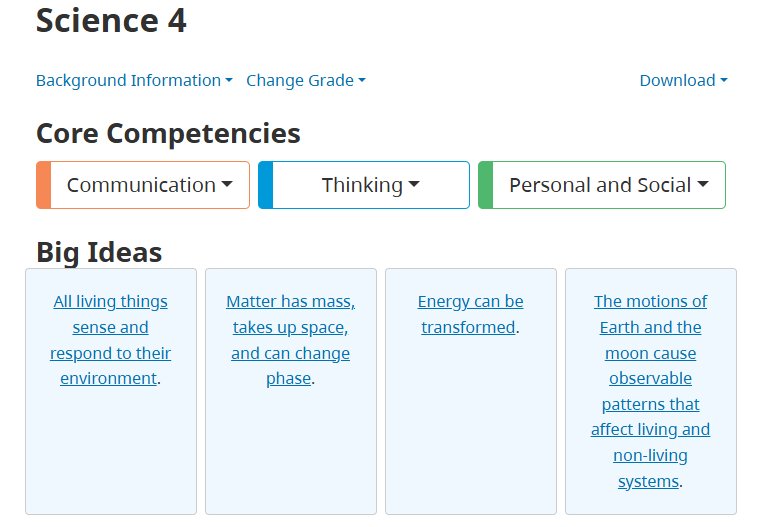
Today, I explored the BC curriculum with the goal of finding where identity, collaboration, and communication meet within Grade 4 science. These three stand out immediately as core competencies across the entire curriculum (communication, personal and social). To dig deeper, I looked into the Grade 4 Big Ideas in science. The concept that “all living things sense and respond to their environment” provides a strong link to identity and collaboration, opening up opportunities for students to explore their identities in relation to place. This idea extends into Indigenous worldviews and First People’s Principles like “Learning is holistic, reflexive, reflective, experiential, and relational (focused on connectedness, on reciprocal relationships, and a sense of place).”

Looking further into the BC curriculum, the curricular competencies mention “express[ing] and reflect[ing] on personal or shared experiences of place” which is a strong link to both identity and communication. When looking for ties to collaboration, I found “contribute to care for self, others, school, and neighbourhood through individual or collaborative approaches” and “co-operatively design projects.” Students are encourages to ask questions, work together, reflect on their past experiences, and share their findings in meaningful ways: all tying to identity, collaboration, and communication.

I’m definitely leaning toward creating a Grade 4 Science unit for my end project. The curriculum holds so much potential to explore ecosystems and cultural identity.

Universal Design for Learning

07/10/25

Today, I further explored the idea of the Universal Design for Learning (UDL). UDL gives learners equal opportunities to succeed by planning for variability at the very beginning (A woman ill-prepared is a woman set up to fail!). After watching the video below, what stood out to me most was the idea that we cannot design learning for the “average student,” because that student doesn’t exist.

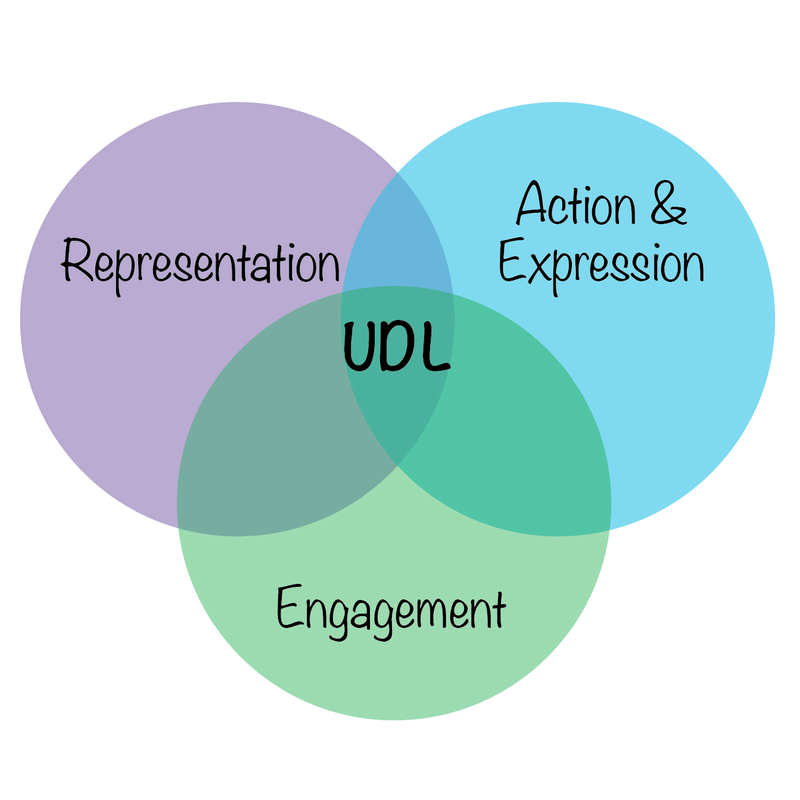
The Cast UDL guidelines create a framework for this practice. UDL is built around three principles: Representation, Action & Expression, and Engagement. The strength of the content you teach is not as important as HOW you are presenting that content and engaging students with it. The guidelines give specific suggestions for providing choices, reducing barriers, and building independence over time.

Shelley Moore’s video was powerful. Her bowling analogy, how you aim for not only the middle pins, but for the corners too, make the abstract concept of inclusion feel not only tangible, but essential too. It’s not about making individual plans for each student (knocking each pin over one at a time), but about creating a differentiated lesson where everyone feels included (hitting all the pins/as many as you can in one fell swoop).

In sum, today made me think deeper about how to bring UDL into practice. This means planning lessons that are grounded in UDL principles by anticipating diversity, giving meaningful options, and encouraging students to take control of their own learning. UDL supports equity, not by treating everyone the same, but by ensuring everyone has what they need to thrive.

Curiosity Over Fear

07/09/25

When looking at the history of teaching, there are two places where teaching had to change and adapt completely: 1998 and 2023. 1998 marked the birth of Google, which meant that learning was no longer centred around learning through teaching. Classrooms and libraries were not the only place to learn now, you could find any information you wanted through the internet. Access to knowledge was free and it was everywhere. Rote memorization was abandoned, replaced with critical thinking and personalized learning. A new tool, originally frowned upon, was embraced in education, forever changing the way we think, learn, and teach.

A similar change began in 2023 with the introduction of generative Artificial Intelligence (AI) chat bots, like ChatGPT. AI swept the world like a plague, getting faster and more accurate with each new user feeding it information on how to better replicate human scholars. Most notably, ChatGPT found its way into schooling, learning how to forge essays, plagiarize art, and answer an entire math test in approximately 5-10 seconds.

Believe it or not, I’m pro-AI. Well, pro-in-small-amounts. Like candy.

I believe that AI is tool, valuable for everyone, but notably for my future profession as an elementary teacher. It is a tool that can be taken advantage of, for sure, but when used correctly, AI is helpful. It is your own personal assistant, happy to do boring, tedious tasks, lowering workload and decreasing burnout. AI is a tool to be embraced, for it is here now, and it cannot be squished down and put out.

New technology faces backlash and skepticism, no matter what. The calculator was originally seen as a replacement for learning, wiping out teachers and mathematicians. People believed that calculators would lead to future students with no basic math skills… and look at schools now. Calculators are a tool, embraced in school, embraced in society.

AI can write essays and make “art” and answer 100 math questions in 10 seconds, sure. The rate it is advancing and growing is scary, yes. But we were scared of the calculator too. AI is a tool and once it is accepted as one, it will benefit everyone and every profession enormously.

How Technology is Changing Literacy

07/08/25

Today, I explored the article Connected Reading: A framework for understanding how adolescents encounter, evaluate, and engage with texts in the digital age by Turner, Hicks, and Zucker. This article really opened my eyes to how much reading has changed in the digital age. Originally a solitary activity, reading is now social and interactive. Literacy today is about sharing and collaborating, not just absorbing information. Based off of this, I made a haiku:

Readers as learners

Sharing thoughts, we read as one

Connected through text

I originally learned poetry and haiku-making in my grade 10 English class. We were tasked with collaborating as a class to make haikus, then as groups, partners, and eventually alone, and sharing them with each other. Thinking about this, and what I’ve read, I see how social connection through reading is just as important as comprehension.

The Adolescent Brain and Literacy

07/07/25

Today, I deepened my understanding of how powerful the adolescent brain is. Through watching a video and reading an article on neuroplasticity, and listening to a podcast about the importance of continuing to build on foundational skills during adolescence, I have realized that adolescence is one of the most important and flexible periods of development.

One question I posed, How might the quality of an adolescent’s relationships with peers shape their ability to adapt to future complex social environments? got me thinking about the long-term impacts of social dynamics during this stage of development. Supportive relationships don’t just help teenagers to “get through” high school, but actually affect how well they can handle social situations for the rest of their lives.

This makes me reflect on my own time in middle and high school, and how grateful I am that I had a couple groups of friends that stuck with me through thick and thin. In turn, it makes me proud that I was able to be supportive and a good friend to others during this time too.

Teenagers are not just a “behavioural problem to manage,” but kids that need support with learning, relationships, and resilience.

Literacy Today

07/04/25

Today we looked at a “concept carousel” of a collection of images, quotes, and media revolving around themes of literacy and technology. What stood out most for me was the image, a robot introducing a human to all things digital. At first, it seemed to be about how technology is an important tool to help people, but the more I looked, the more it seemed to be a comment on capitalism. It made me realize how visuals can have hidden messages, and how important it is to look beyond the surface.

Today I learned that literacy goes far beyond just the ability to read. It’s about UNDERSTANDING, and specifically understanding images, data, and other digital information. AI is completely reshaping education, and as a future teacher, it is so critical to think about how to appropriately use and teach technology in the classroom.

I’m now thinking about the gap in reading scores globally. Why is Singapore so far ahead, so out of reach? What do we, as Canadian educators, need to do to bridge this gap?

Of course, this is my very first day of EDCI 410. I expect my thinking to change over the span of this course as I am exposed to more information and methods. Today, already, I am already challenged to think about how we teach literacy and how that can be better adapted. Being an educator means constantly re-evaluating how you teach and I expect I will keep questioning more as this course goes on.

« Older posts Newer posts »

© 2026 Emma's Archive

Theme by Anders NorenUp ↑